Regulatory Shifts Reshaping Bonus Structures and Live Table Options in Nordic Digital Venues
Yves Coleman · Aug 22, 2026
Regulatory Shifts Reshaping Bonus Structures and Live Table Options in Nordic Digital Venues
Regulatory changes across Nordic countries continue to influence how operators structure bonuses and manage live table offerings in digital venues, with updates taking shape through 2026. Data from national authorities shows that jurisdictions like Sweden, Denmark, Norway, and Finland have introduced or refined rules aimed at player protection, market stability, and responsible gambling practices since the early 2020s.
These shifts affect everything from maximum bonus amounts and wagering requirements to the certification processes for live dealer platforms. According to figures released by Spillemyndigheden, Danish regulators have tightened reporting standards on promotional offers, requiring operators to disclose bonus terms more clearly to players. Similar patterns appear in other Nordic markets where authorities monitor compliance through regular audits.
Current Regulatory Framework Across Nordic Markets
Sweden maintains a licensing system under Spelinspektionen that sets specific limits on bonuses, including restrictions on how frequently operators can issue welcome packages and reload promotions. Norway operates through a state-controlled model that limits private operator involvement, which in turn shapes the availability of live table games on licensed platforms. Finland has moved toward centralized oversight via Veikkaus while allowing limited private participation under strict guidelines, and these rules extend to how live casino content gets delivered to users.
Observers note that August 2026 marks a key implementation window for several harmonized reporting requirements discussed at Nordic regulatory coordination meetings. These include standardized data formats for tracking bonus redemption rates and live table session durations, which help authorities assess potential risks associated with extended play.
Effects on Bonus Structures
Operators have adjusted bonus designs in response to new caps on deposit matches and free spin quantities. Research from industry reports indicates that many platforms now emphasize cashback programs over traditional deposit bonuses because the former face fewer restrictions in several jurisdictions. Wagering requirements have also seen reductions in Denmark and Sweden, with maximum multipliers lowered to align with consumer protection goals.
Those tracking market data find that loyalty rewards and VIP structures remain popular alternatives since they often bypass direct bonus limits. Compliance teams at larger venues report increased investment in automated tracking systems that flag when promotional activity approaches regulatory thresholds. This approach allows operators to maintain competitive offerings while staying within updated boundaries.
Adjustments to Live Table Options
Live table games face additional scrutiny regarding game fairness certification and dealer training standards. Finnish and Swedish authorities require third-party testing for random number generators and real-time streaming integrity, which has led some providers to expand their Nordic-specific game libraries with localized features. Data shows that blackjack and roulette variants remain core offerings, yet operators have introduced more speed variations and multi-hand options to meet diverse player preferences under the new rules.
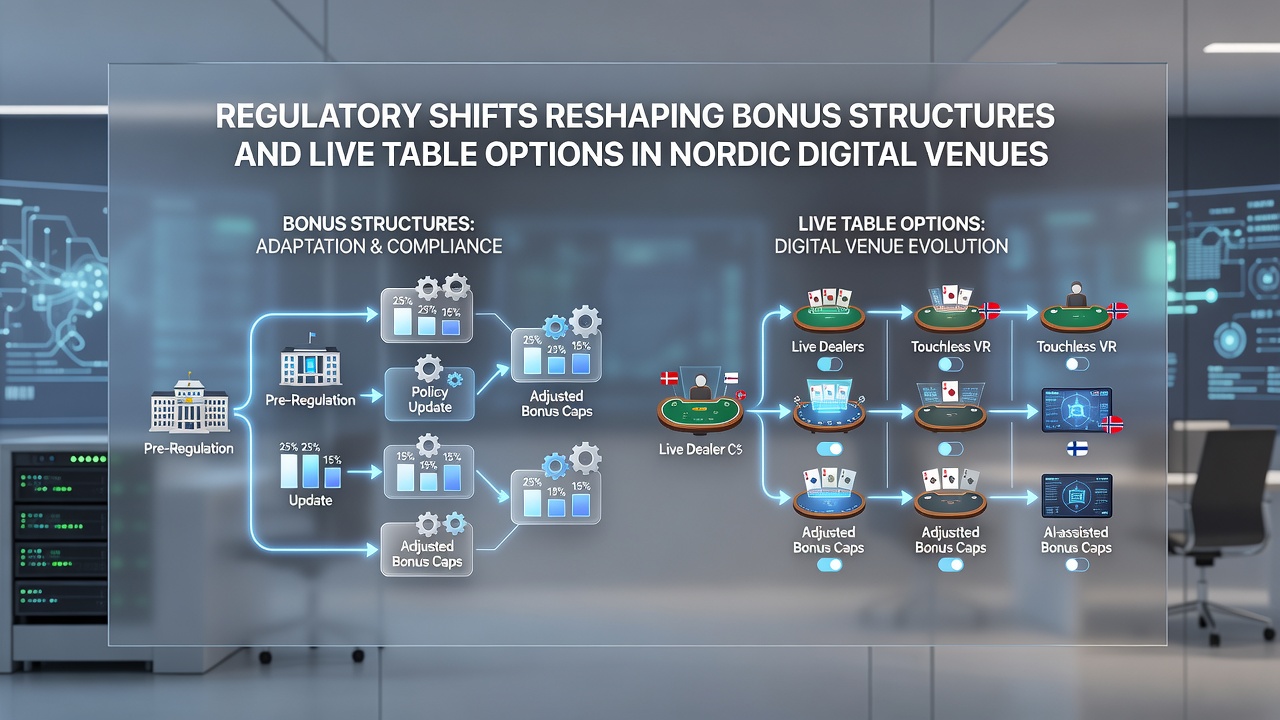
Norwegian platforms, constrained by monopoly structures, focus on partnerships with approved live game suppliers that meet state-mandated technical specifications. Experts have observed that these requirements include enhanced identity verification during live sessions, which adds layers of security but also influences session flow. In August 2026, pending updates to cross-border streaming protocols may further standardize how international live dealer feeds integrate with Nordic user accounts.
Industry Responses and Compliance Trends
Operators respond by reallocating resources toward compliance departments and technology upgrades that monitor both bonus distribution and live game metrics. According to information shared by the Nordic Council, collaborative workshops held in 2025 helped align practices across borders, reducing duplication in licensing procedures for multi-jurisdictional venues. This coordination has produced clearer guidelines on acceptable marketing language tied to promotional offers.
Smaller platforms sometimes partner with larger groups that already maintain robust compliance frameworks, allowing them to adapt more quickly to rule changes. Figures from regulatory filings reveal steady growth in live table participation even as bonus structures evolve, suggesting that player interest remains strong despite the adjustments.
Conclusion
Regulatory developments continue to guide how Nordic digital venues handle bonuses and live table options, with measurable impacts visible in operator strategies and player engagement patterns. As August 2026 approaches, further refinements to reporting and technical standards are expected to take effect, building on existing frameworks established by national authorities. These changes reflect ongoing efforts to balance market activity with oversight across the region.